





Your kitchen counters look fine, but the cabinet fronts feel sticky. You vacuum every week, yet dust has collected along the baseboards. Does that mean you need a deep clean—or would a regular cleaning appointment be enough?
The answer depends on your home’s current condition, the tasks you want completed, and how well routine cleaning has kept up with daily use. The size of your home or the date of your last professional visit cannot answer that question on its own.
This guide explains the difference, shows what to check room by room, and helps you book a service with clear expectations.In this guide
- The quick answer
- What is regular cleaning?
- What is deep cleaning?
- Regular vs. deep cleaning: a room-by-room comparison
- How to decide: inspect five places
- Four examples of choosing the right service
- How often should you book each service?
- Why deep cleaning usually costs more
- What deep cleaning does not automatically include
- Is deep cleaning the same as disinfecting?
- How to prepare for your appointment
- Frequently asked questions
- Choose the cleaning that matches your home
The quick answer
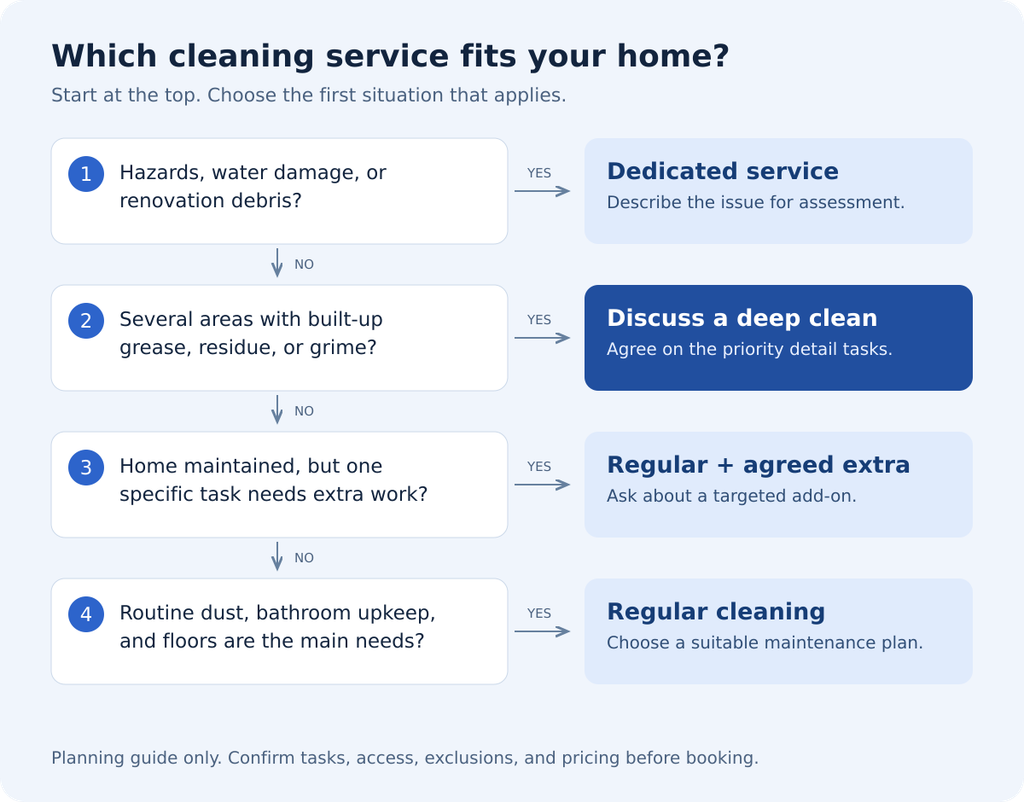
Choose regular cleaning when your home is reasonably maintained and you need help with recurring chores such as dusting, bathroom cleaning, vacuuming, and mopping.
Choose deep cleaning when several areas need more detailed work: greasy cabinet fronts, persistent soap residue, dusty trim, or other buildup that a maintenance visit is unlikely to address within its planned scope.
If the home is maintained but only one item needs extra attention—such as the oven interior—ask about regular cleaning with a specific add-on. A whole-home deep clean may be unnecessary.
| What you are comparing | Regular cleaning | Deep cleaning |
|---|---|---|
| Main purpose | Maintain a home’s existing condition | Address accumulated buildup and agreed detail work |
| Best starting condition | Routine cleaning has kept up with use | Several surfaces need more than routine upkeep |
| Main focus | Recurring tasks in frequently used areas | Routine tasks plus a broader or more detailed scope |
| Frequency | Often booked on a recurring schedule | Booked when the home’s condition calls for it |
| Time and cost | Generally less for the same home and comparable scope | Generally more when additional labor is needed |
| Important limitation | Does not automatically include restoration or heavy buildup removal | Does not automatically include every appliance, window, or specialty task |
Compare the checklist, not just the service name. Ask which surfaces, interiors, and detail tasks are included in your quote.
What is regular cleaning?
Regular cleaning is the maintenance work that helps a home stay comfortable and manageable between visits. It usually focuses on the areas people use most: kitchens, bathrooms, bedrooms, and living spaces.
A maintenance visit can involve cleaning counters and sinks, wiping accessible surfaces, cleaning the toilet and shower, dusting furniture, emptying bins, and caring for floors. The exact list depends on the package you book.
The key is the starting condition. Cleaning a recently maintained shower is a different job from removing layers of residue that have developed over time. Both involve the shower, but they may require different amounts of work.
Regular cleaning is a good fit when you are satisfied with your home’s overall condition and want reliable help keeping it that way. You can review our maid service options and compare the tasks against your priorities.
What is deep cleaning?
Deep cleaning expands the attention given to detail areas and accumulated soil. Think of the places that can remain dirty even after the room looks tidy: the edges around fixtures, the trim beside the floor, or the cabinet surfaces near the stove.
The practical difference is often how much work a surface needs, not simply whether a cleaner touches it. A cabinet front might need a quick wipe during maintenance, while a sticky area may require a more deliberate cleaning process.
A deep clean can be useful before starting recurring service, after a period when household chores fell behind, or when several overlooked areas need attention at once. It is not automatically necessary because you are a first-time customer.
Our deep cleaning service page describes the available service. Before booking, confirm any must-have tasks—especially appliance interiors, windows, blinds, and cabinet interiors—in the written scope.
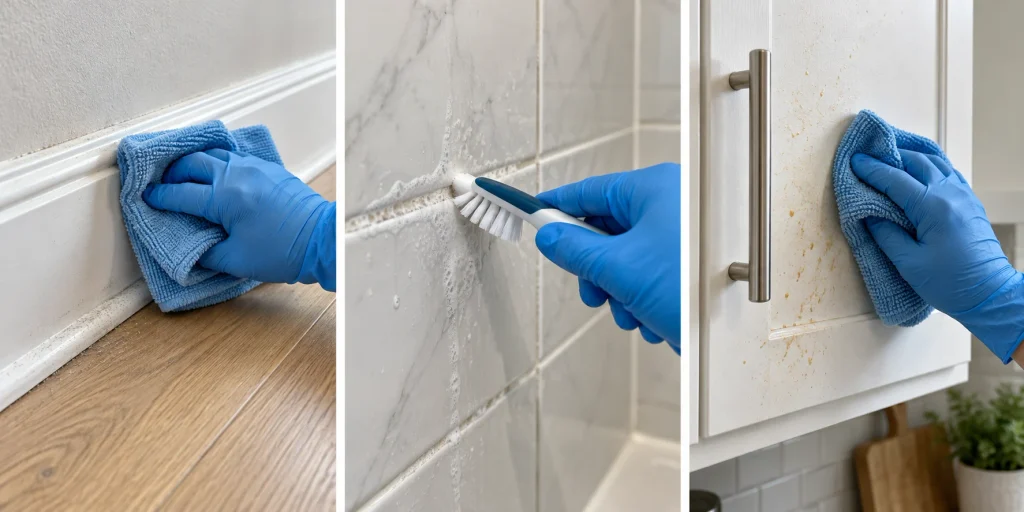
Detail work may involve different tools and more attention to individual surfaces. AI-generated illustration; not a before-and-after result.
Regular vs. deep cleaning: a room-by-room comparison
The examples below explain maintenance work versus additional detail work. They are a planning guide, not a guarantee that every listed task is included in either package. Use the cleaning checklist together with your confirmed quote.
| Area | Maintenance focus | Extra detail to discuss |
|---|---|---|
| Kitchen counters and sink | Crumbs, everyday spills, and ordinary residue | Buildup around fixture bases, edges, and seams |
| Stovetop and nearby surfaces | Fresh cooking mess and routine wiping | Adhered grease or food residue; surface-safe treatment |
| Cabinet fronts | Accessible exterior surfaces and fingerprints | Sticky film near cooking areas and handles |
| Shower and bathtub | Routine washing of accessible surfaces | Soap buildup and deposits requiring additional attention |
| Bathroom tile and grout | Ordinary surface cleaning | Targeted scrubbing; clarify whether specialty treatment is needed |
| Bedrooms and living areas | Accessible furniture, mirrors, and floors | Trim, ledges, fixture details, and reachable overlooked areas |
| Baseboards and door frames | Ask whether any dusting or spot work is included | Detailed wiping of accessible surfaces |
| Under furniture | Reachable floor areas | Additional access; confirm what can safely be moved |
| Windows and blinds | Ask which surfaces are covered | Glass, tracks, sills, and blinds are separate tasks to specify |
| Oven, refrigerator, and cabinets | Exterior cleaning where included | Interior cleaning must be explicitly confirmed |
The kitchen: look beyond clear countertops
A clutter-free kitchen can still need detail work. Check the cabinet fronts near the stove, the area behind small countertop appliances, and the edges around the sink. If the main issue is fresh crumbs and a few spills, maintenance may be sufficient. If several surfaces feel sticky or have adhered residue, describe those areas when requesting a quote.
Be specific about appliances. “Clean the refrigerator” could mean wiping the outside, cleaning empty shelves inside, or removing and washing drawers. Tell the provider what you expect and ask whether you need to empty the appliance beforehand.
The bathroom: identify residue and surface condition
Look at the shower glass, faucet bases, tub edges, and grout lines. A recently maintained bathroom may need routine cleaning; a room with persistent soap residue may need more time.
Do not assume that every mark can be cleaned away. Discoloration, worn finishes, damaged grout, and etched surfaces can remain after cleaning. Share photos of problem areas and ask what improvement is realistic before approving extra work.
Bedrooms and living areas: check access
Floors may be vacuumed regularly while edges, ledges, and trim receive less attention. Check these areas before deciding whether you need a broader appointment.
Access also matters. A cleaner cannot reach the floor beneath a bed packed with storage bins or wipe a shelf covered with fragile collectibles without additional preparation. Explain any heavy furniture, delicate objects, or inaccessible spaces when arranging the visit.
How to decide: inspect five places
You do not need to inspect every corner of your home. Start with five useful checkpoints:
- Cabinet fronts near the stove: Is there noticeable sticky residue?
- Shower glass or tub walls: Does soap buildup remain after your usual cleaning?
- Baseboards in a busy room: Is there accumulated dust or adhered grime?
- Accessible ledges and fixture bases: Have detail areas been repeatedly missed?
- Floor edges and reachable areas under furniture: Is debris collecting beyond the usual vacuuming path?
If the home is generally maintained and these areas need little attention, regular cleaning is a sensible starting point. If several need substantial work, describe them when discussing deep cleaning. If only one stands out, request a targeted task.
This is a practical decision aid, not a formal scoring system. The provider still needs to assess the requested work.
Four examples of choosing the right service
A maintained condo needs weekly help. The household keeps up with spills, the shower has no significant buildup, and the main concerns are floors, dusting, and bathrooms. Regular cleaning matches those needs.
An apartment looks tidy but needs detail work throughout. Kitchen cabinet fronts are sticky, bathroom surfaces have persistent residue, and trim has been overlooked. Discuss a deep clean that explicitly covers those priorities.
A clean home has one neglected oven. Most rooms only need maintenance. Ask whether a regular visit plus oven-interior cleaning is available and compare that quote with a broader package.
An empty rental needs preparation between occupants. Empty cabinets, closets, and appliances may be important. Request move-out cleaning or move-in cleaning and agree on the turnover checklist rather than assuming an occupied-home deep clean covers everything.
These are hypothetical examples, not customer case studies or promised outcomes.
How often should you book each service?
A useful schedule is the one that prevents your priority areas from repeatedly falling behind. Start with household activity and the cleaning you do yourself, then adjust after seeing the results.
| Your household situation | A schedule to consider | What to review |
|---|---|---|
| Busy home with frequent cooking or tracked-in dirt | Weekly maintenance | Whether kitchens, bathrooms, and floors stay manageable |
| Moderate use with some cleaning between visits | Every two weeks | Whether residue or dust builds up before the next appointment |
| Light use with consistent DIY upkeep | Monthly professional help | Whether the actual condition still fits a maintenance visit |
| Several detail areas have fallen behind | A deep clean, followed by an appropriate maintenance plan | Whether the agreed detail work was completed |
| A single recurring problem area | A targeted extra when needed | Whether a small scope change solves the problem |
These are planning options, not hygiene requirements or fixed rules. A monthly booking does not guarantee that the home will qualify for a regular-cleaning scope every time.
Seasonal changes can also be a useful reminder to reassess your Chicago home. If winter footwear is bringing in dirt, prioritize the entryway and floors. If you have started leaving windows open, check the nearby ledges. Adjust to what is actually happening in the home rather than booking a deep clean just because the calendar changed.
Why deep cleaning usually costs more
For the same home, a broader appointment generally requires more labor. The extra cost should correspond to identifiable work: additional surfaces, more buildup, agreed appliance interiors, or other detail tasks.
Square footage matters, but it does not tell the whole story. Two equally sized homes can require very different work if one has an extra bathroom, significant cooking residue, or much less accessible floor space.
| Factor | Why it matters | What to tell the provider |
|---|---|---|
| Rooms and bathrooms | More spaces and fixtures add work | Accurate room counts and areas to exclude |
| Current condition | Accumulated residue changes the effort required | Recent photos and specific problem areas |
| Requested interiors | Appliance and cabinet interiors expand scope | Exactly which interiors you want cleaned |
| Access and clutter | Blocked surfaces limit what can be reached | Furniture, belongings, stairs, or building-access constraints |
| Pets | Hair and tracked-in debris can change the workload | Pet type, relevant areas, and any heavy accumulation |
| Surface requirements | Delicate finishes may need different methods | Known material types and manufacturer care instructions |
Ask whether the quote is fixed-price or hourly. For an hourly service, also ask whether the rate is per cleaner or per team and what happens if the approved time runs out.
For example, two cleaners working for three hours represent six labor-hours. One cleaner working for six hours also represents six labor-hours. This arithmetic explains staffing; it does not predict your home’s cleaning time, and actual efficiency can differ.
For current options, use our pricing page or request a quote. A starting price should not be treated as a guaranteed deep-cleaning total for your property.
What deep cleaning does not automatically include
Avoid using “everything” as the description of a cleaning appointment. Even a detailed service needs defined boundaries.
Confirm the following before booking if they matter to you:
- Oven and refrigerator interiors, including racks, shelves, and drawers.
- Cabinet interiors and whether they must be emptied.
- Window glass, tracks, screens, and exterior windows.
- Blinds, high fixtures, and areas that require special access.
- Moving heavy furniture or large appliances.
- Carpet extraction, upholstery washing, and stain treatment.
- Wall washing, laundry, dishes, and organizing belongings.
Also distinguish household cleaning from repair or specialist work. A dusty vent cover is different from cleaning inside ductwork. Shower-surface cleaning is different from repairing grout or addressing a hidden moisture problem.
For significant water damage or extensive mold growth, the EPA recommends additional remediation guidance and experienced providers. Do not assume an ordinary deep-cleaning appointment includes mold remediation. [2]
Similarly, renovation dust and debris call for a discussion about post-construction cleaning, especially when materials or hazards are uncertain.
Is deep cleaning the same as disinfecting?
No. Deep cleaning describes the scope and detail of the work; disinfecting describes a process used to kill germs on surfaces.
The CDC distinguishes cleaning, which removes dirt and germs, from disinfecting, which uses appropriate products to kill remaining germs. It advises cleaning surfaces before disinfection and following the product’s required wet contact time. [1]
The CDC also notes that routine cleaning is sufficient in many household situations; disinfection is particularly relevant when someone is sick or at higher risk because of a weakened immune system. [1]
If disinfection is a priority, say so before booking and ask which surfaces and procedures are covered. A deep-cleaning label alone does not establish that a disinfection protocol will be performed.
For any cleaning method, use products suitable for the surface and follow their labels. Do not mix cleaning chemicals. [1]
How to prepare for your appointment
You do not need to clean the home before the cleaner arrives. The most useful preparation is making the agreed areas accessible and communicating priorities.
- Clear the working areas. Pick up loose clothing, toys, and personal items from the floors and surfaces you want cleaned.
- Send relevant photos. Show buildup, delicate finishes, damage, or spaces that may need extra time.
- List your top priorities. “Shower residue and sticky kitchen cabinets” gives more direction than “make everything spotless.”
- Prepare booked interiors. Ask whether to empty the refrigerator, oven, or cabinets in advance.
- Arrange access. For a Chicago apartment or condo, explain entry codes, parking instructions, stairs, elevator access, and building requirements.
- Plan for pets and fragile belongings. Keep animals comfortably away from the work area and secure valuables or delicate objects.
- Review the scope. Confirm extras, exclusions, the pricing arrangement, and how any changes will be approved.
A short walkthrough afterward can help identify an overlooked agreed task and distinguish it from a mark that requires repair or a separate treatment.
Frequently asked questions
Do I need a deep clean before starting regular service?
Not necessarily. It depends on the home’s condition and the provider’s requirements. A well-maintained home may be ready for regular service immediately. If buildup would prevent a maintenance visit from meeting the agreed expectations, an initial deep clean may make sense.
Can I book regular cleaning if my home is very dirty?
Describe the condition honestly before choosing the package. A maintenance appointment may not allow enough time for substantial buildup. Photos help the provider recommend an appropriate scope and reduce the chance of a surprise change on arrival.
Does deep cleaning include the inside of the oven and refrigerator?
Do not assume it does. These tasks may be included in a specific package or priced separately. Confirm the appliance interiors you want in your quote, along with any preparation you need to complete.
Is a one-time cleaning always a deep cleaning?
No. “One-time” describes how often you book; “deep” describes the work. A single visit can be a maintenance clean, a detailed clean, or a focused appointment with agreed extras.
Will deep cleaning remove every stain?
No service should promise that without assessing the material and the mark. Some discoloration is permanent or reflects surface damage. Ask which results are realistic and whether specialist treatment is appropriate.
Can deep cleaning help with pet hair?
It can include additional hair-removal work if that is agreed in advance. Tell the provider where hair collects and whether upholstery is a priority. Vacuuming a sofa and washing its upholstery are different services.
How long does a deep clean take?
There is no reliable single duration for every home. The scope, condition, access, and number of cleaners affect the appointment. Request an estimate for your property and clarify whether it refers to elapsed visit time or total labor-hours.
Should I choose deep cleaning before guests arrive?
Choose based on condition. A maintained home may only need regular cleaning, with attention to the guest bathroom and common areas. If several areas need buildup removal, discuss a deeper appointment and allow time before your guests arrive.
Choose the cleaning that matches your home
Start with the work you want done. If recurring chores are the main problem, regular cleaning may be the right fit. If accumulated grime and missed details are the problem, discuss deep cleaning. If only one area needs extra help, ask about a focused add-on.
Tell Chicago Cleaning Services about your home, your priorities, and any areas that need special attention. Review the service checklist and request a cleaning quote with the tasks that matter to you.
Sources and scope notes
[1] CDC: When and How to Clean and Disinfect Your Home. Supports the cleaning/disinfection distinction and product-use guidance; it does not define commercial cleaning packages.
[2] U.S. EPA: Mold Cleanup in Your Home. Supports the distinction between routine cleaning and situations requiring remediation expertise.
Service references: Chicago Cleaning Services’ deep cleaning page, cleaning checklist, and pricing page. Your confirmed booking scope determines the work included.
Sources checked October 1, 2026. The schedules, scenarios, and inspection guide above are practical editorial suggestions, not published research findings or universal service standards.
